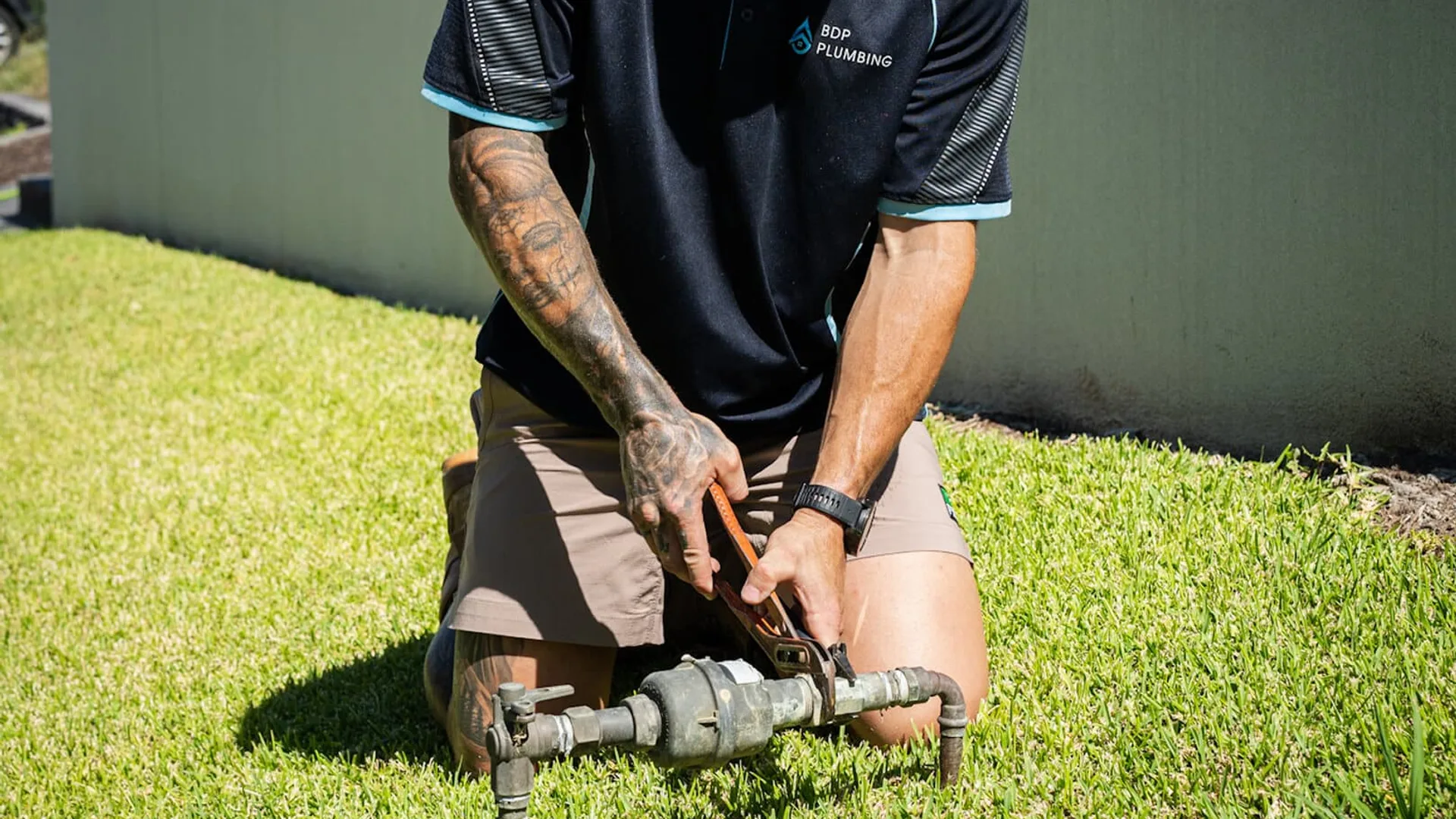
Water coming out where it should not
A burst pipe is the one plumbing problem where minutes genuinely matter. The damage grows the whole time the water keeps running.
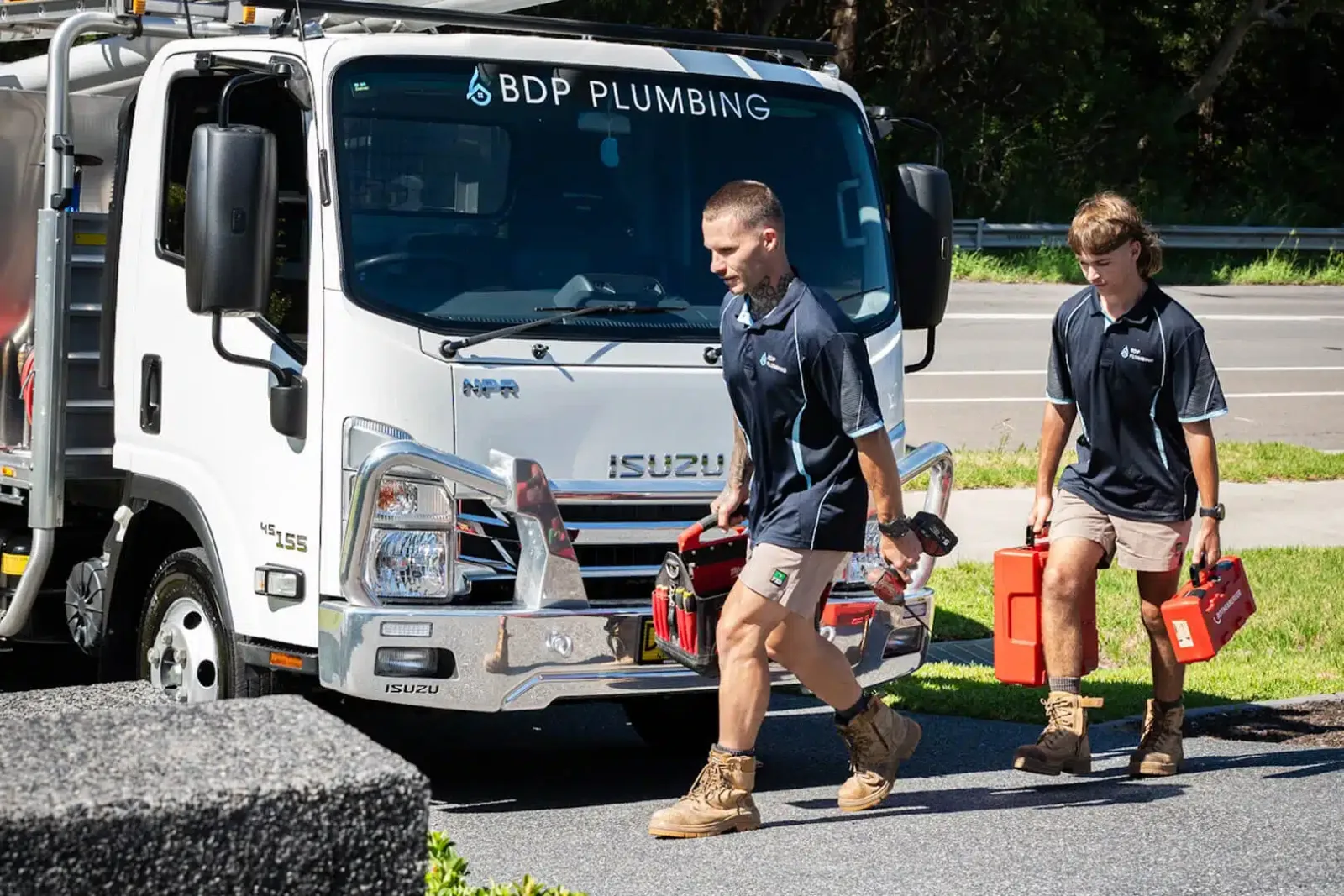
Ring (02) 4063 3450 and we'll talk you through shutting the supply off while we head your way. Plumbers Belmont sees its share of burst lines, and most fall into two camps.
- A braided hose under a sink or vanity that splits without warning
- A decades-old water line in a post-war home that finally gives up
We fix both, and everything in between.
What a burst pipe actually looks like
Not every burst announces itself with a fountain. Some do, especially a split hose under a vanity, but others start quieter and get expensive fast.
Call us out when you notice any of these:
- Water pooling under a sink, vanity or laundry trough with no obvious appliance cause
- A damp or swollen patch of wall, ceiling or skirting that keeps coming back
- Hissing or spraying from an external tap, garden line or pipe run along the house
- A meter spinning with every tap in the house turned off
- Sudden loss of pressure across the whole home
That last one matters. If the pressure drops everywhere at once, a line has likely let go somewhere you can't see it, and the meter test above will confirm it in a minute.
Why pipes let go here, simplest fix first
What the repair costs depends almost entirely on what failed and where. These run from quickest to most involved.
Burst flexi hoses
Braided hoses under sinks and vanities split without warning, and they cause plenty of the after-hours floods we attend. Swapping one for a quality replacement is a fast, tidy job.
Failed taps and fittings
A cracked fitting or failed valve on a laundry tap can dump a lot of water, yet the repair stays inexpensive when the pipe behind it is still perfectly sound.
Corroded pipework
Decades-old water lines in the post-war fibro and weatherboard homes corrode faster with salt in the air here, and a weakened section can let go with no warning at all.
Buried runs and garden lines
Bursts on buried runs out to garden taps take more digging to reach, and the high water table on this low sandy peninsula can make that excavation work slower to finish.
One thing worth knowing if you live in one of the peninsula's older cottages: when one corroded length lets go, its neighbours are usually not far behind. We'll always tell you honestly whether you're looking at a one-off repair or the first of several.
What you can safely check before we arrive
Three steps, in this order, and none of them need tools beyond a hand turn.
- 1
Turn the water off at the meter
The meter sits near the front boundary, usually by the path. Turn the tap handle clockwise until it stops. That ends the flooding, full stop.
- 2
Kill the hot water unit if the burst is on a hot line
Switch it off at its own controller so the tank doesn't keep heating an empty system.
- 3
Clear the water
Towels, buckets and moving rugs or boxes out of the wet area limit the damage while you wait for us.
Don't run taps to "drain the line" and don't try to clamp a pipe with tape or a rag. Both usually make our job harder and neither holds.
When it becomes a definite call-now job
Some situations can wait for a booked appointment. These cannot:
- Water still running with the meter already off, meaning the burst is on the hot side or a tank is draining
- Water reaching light fittings, downlights or anywhere near the fuse box
- A ceiling bulging or sagging anywhere near the leak
- Water flowing toward a neighbour's place or pooling across a driveway
If any of those apply, ring (02) 4063 3450 straight away and tell us exactly where the water is showing. A running flood goes ahead of anything booked in.
What we do when we arrive
- 1
Call and tell us
Ring (02) 4063 3450 and tell us what's going on in Belmont. We'll ask a few quick questions so the right gear is on the truck the first time.
- 2
Quote before work
You get the price before anything starts. No call-out fee, no hourly surprises — you approve the quote or we shake hands and leave, no charge.
- 3
Stop the water and fix the failure
We isolate the failed section, repair or replace the burst with parts suited to salt air, and pressure test the line so you know the fix holds before we leave.
- 4
Backed, no questions asked
If something isn't up to standard afterwards, we come back and make it right, no questions asked. That's the standard every Belmont job is held to.
If the burst points to a bigger story, like a line that's corroded along most of its run, we'll show you what we found and quote the follow-on work separately. Nothing gets rolled into the emergency call without you seeing it first. For the wider urgent-jobs picture, the emergency plumbing hub covers the lot.
Why locals ring us first
$0 Call Out
Quote First, Always
Licensed Local Plumbers
Made Right, No Questions Asked
A burst line gets the same treatment whether it fails at lunchtime or late in the evening: stop the water, fix the failure, leave you with a line that holds.
Once the burst is sorted, the general plumbing team handles repairs, renovations and everything else across the peninsula, so there's a familiar face for the follow-on work too.
Burst pipe questions we hear on the phone
Should I turn the water off myself while I wait?
Yes, if you can reach the meter safely. Turning the supply off at the meter stops the water spreading while you wait, and it costs you nothing to do it.
Can a burst pipe wait until morning?
Not when water is still running. The damage grows the whole time a line stays open, so an active flood gets priority over anything booked in.
Is a split braided hose under the sink an emergency?
Treat it as one. A braided hose can release a lot of water into a cupboard in a short time, and the replacement itself is quick once we are on site.
Do you repair the pipe or replace it?
We assess the failed section first. A single corroded length can be cut out and swapped, but a line that has corroded along its run often makes full replacement the better money.
Why do pipes burst more often near the coast?
Salt-laden air works over external pipework and fittings year-round, and much of the housing here dates from the post-war decades, so a lot of original pipe is already well advanced in age.
What if the burst is inside a wall or under the floor?
We trace the leak to the exact spot before opening anything, so the smallest practical section of wall or floor gets cut and the repair stays contained.
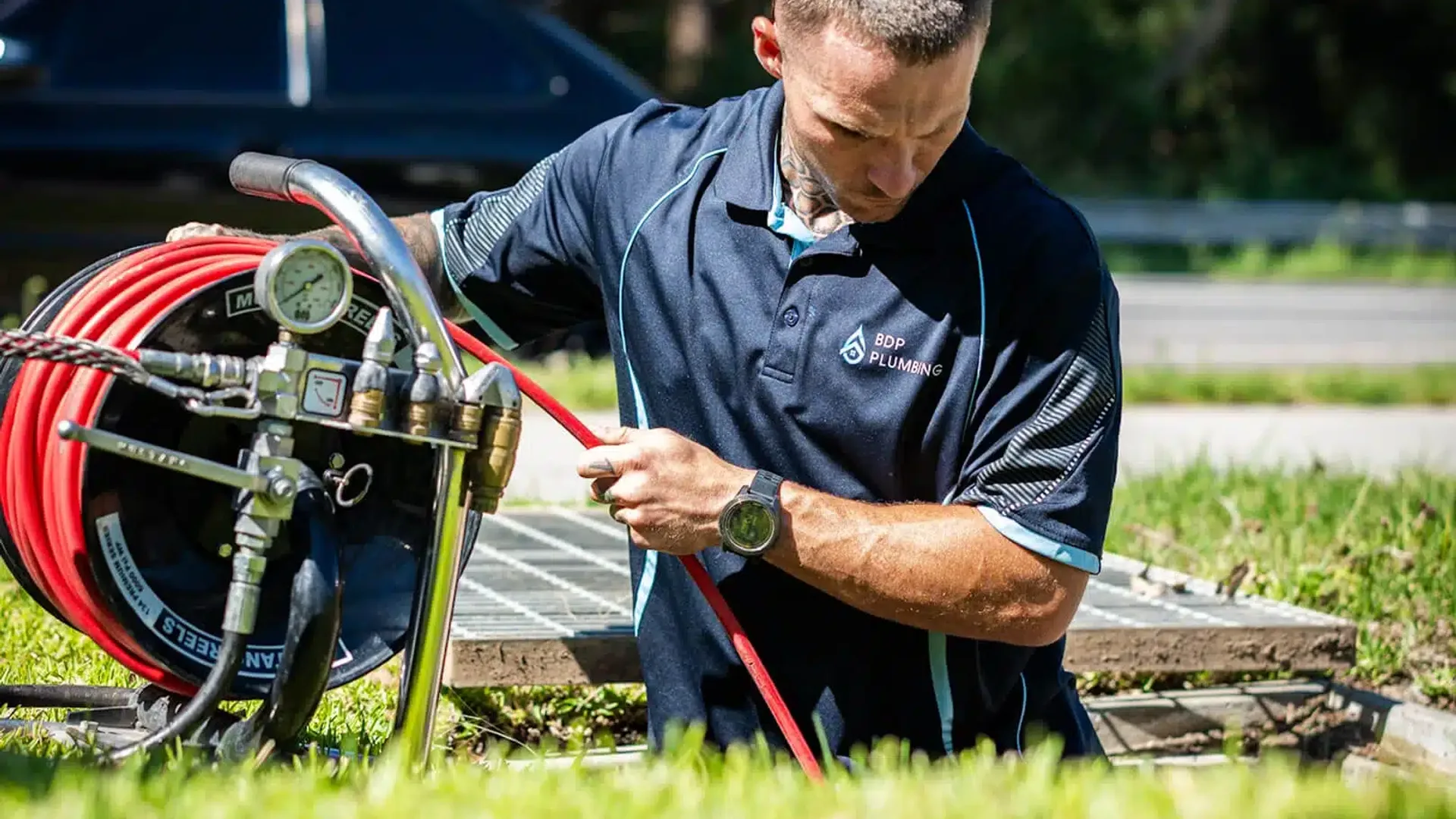
Plumbers in Belmont and the suburbs around it